- Blog
- August 19, 2026
How to Build a CFO-proof Data Platform with Microsoft Fabric
- Blog
- August 19, 2026
How to Build a CFO-proof Data Platform with Microsoft Fabric
Many enterprises are investing in Microsoft Fabric but still struggle to demonstrate clear financial value from their analytics environments. As data platforms expand, CFOs increasingly want predictable spending, visible usage, and evidence that technology investments are reducing duplication rather than creating another layer of cost.
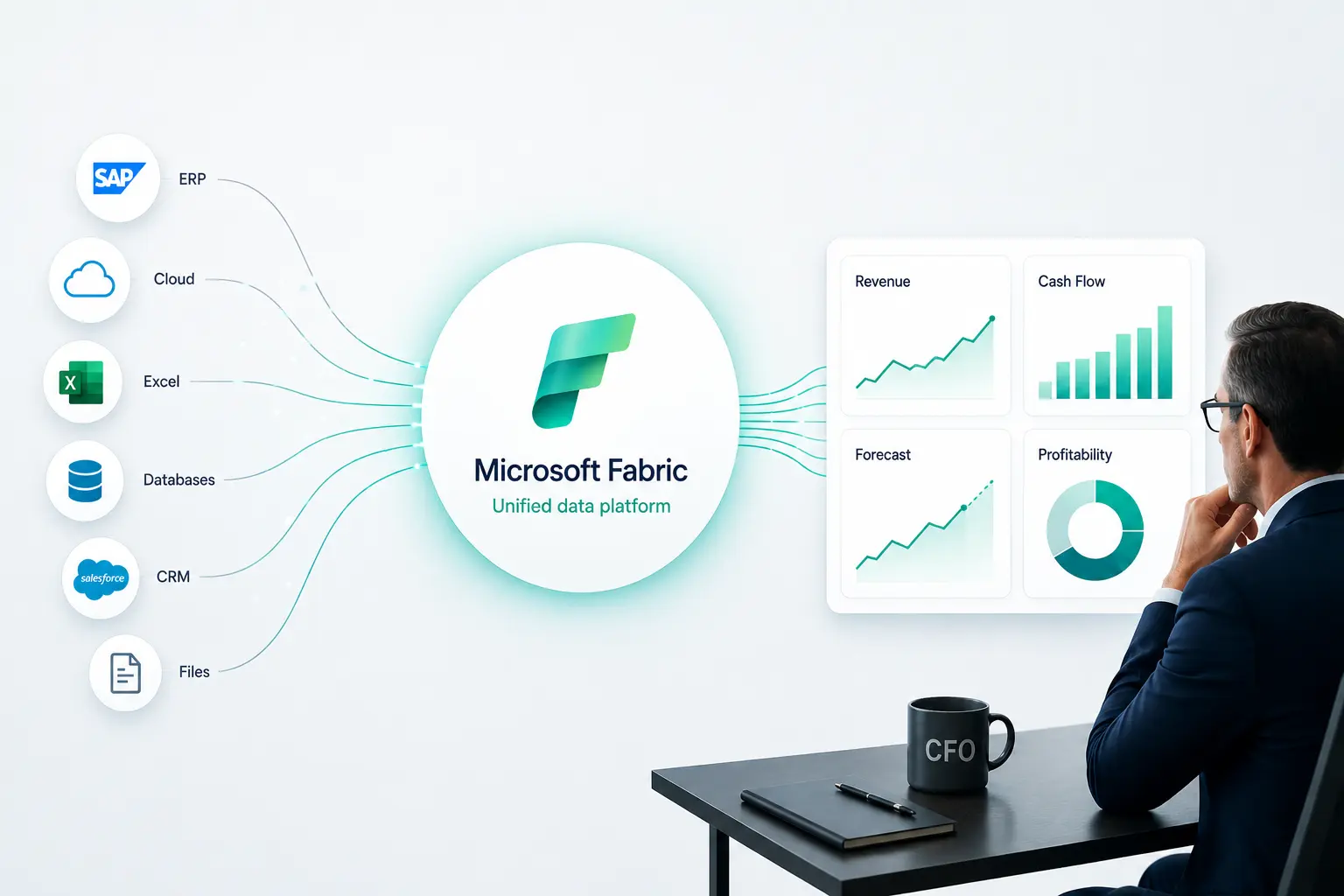
A CFO-proof data platform is not simply a cheaper platform. It is one where spending is predictable, resources are appropriately sized, usage is visible, and business value can be demonstrated. Microsoft Fabric can support this model by bringing analytics workloads together under a unified platform, while capacity management and governance practices help organizations maintain financial control.
What Makes a Data Platform CFO-Proof?
Analytics spending can become difficult to control when organizations accumulate multiple BI tools, duplicate data pipelines, fragmented workloads, and underutilized cloud resources. Limited visibility into usage can make it difficult to determine where money is being spent or whether the investment is delivering sufficient value.
A CFO-proof data platform addresses these challenges through three connected pillars:
- Capacity rightsizing: Align Fabric capacity with actual workload requirements. Monitoring utilization helps organizations identify underused resources and make informed decisions about scaling.
- Consolidation: Reduce unnecessary duplication across analytics tools, datasets, pipelines, and semantic models. Shared data assets can reduce repeated development and create a more consistent analytics environment.
- Governance: Establish clear ownership, access controls, budgets, and accountability for platform usage. Governance makes it easier to understand who is consuming resources and whether that usage supports business priorities.
These pillars work together. Rightsizing without consolidation may leave duplicated workloads untouched, while consolidation without governance can simply move the same cost and complexity into a different environment.
Right-Sizing Microsoft Fabric Capacity
Capacity optimization starts with understanding how the platform is actually being used. Instead of selecting capacity based only on projected users or data volume, organizations should examine workload patterns, concurrency, processing requirements, and growth expectations.
The Fabric Capacity Metrics app can help teams understand capacity utilization and identify workload patterns that require attention. Organizations can then make more informed decisions about when to scale resources, optimize workloads, or adjust capacity configurations.
A practical approach includes:
- Monitor workload consumption to understand actual demand.
- Validate capacity against representative workloads before committing to long-term sizing decisions.
- Scale resources according to demand rather than maintaining excess capacity during consistently low-usage periods.
- Review pricing options for predictable workloads when long-term capacity requirements are well understood.
Capacity rightsizing should not be treated as a one-time exercise. Workloads change as new reports, users, pipelines, AI applications, and data sources are introduced. Regular capacity reviews help ensure that resources continue to match business requirements.
Consolidation That Increases Adoption
Consolidation should be about more than reducing the number of analytics tools. Done correctly, it can make data easier to discover, reuse, and trust.
When teams build separate pipelines and datasets for similar business requirements, organizations can end up paying for duplicated processing while also creating conflicting versions of business metrics. A unified Fabric environment can help teams share data assets, pipelines, and semantic models rather than repeatedly rebuilding the same capabilities.
The goal is not to eliminate every existing tool immediately. A phased approach is more practical. Organizations can begin with high-value workloads, demonstrate improvements, and gradually expand standardization as teams adopt the platform.
Consolidation can also support adoption. Curated, business-ready datasets and reusable semantic models give users a trusted starting point for analytics instead of forcing every team to build its own data foundation.
This creates a stronger connection between cost optimization and business value. The objective is not simply to spend less. It is to generate more useful analytics from the resources being funded.
Governance That Makes Cost Visible
Technology consolidation does not automatically create financial control. Organizations also need governance practices that make platform usage visible and accountable.
Clear ownership should be established for workspaces, data assets, and workloads. Teams can then introduce budgets, usage monitoring, and showback or chargeback approaches where appropriate. This helps business and technology leaders understand how resources are being consumed and connect costs to departments, projects, or business priorities.
Governance should also cover data access, classification, and security. Controlling who can create, access, and share data assets reduces unnecessary duplication while helping protect sensitive information.
Regular reviews can identify unused resources, duplicate workloads, unexpected capacity consumption, and opportunities for optimization. This turns cost management into an ongoing operating practice rather than a reaction to an unexpected cloud bill.
The result is greater transparency between technology investment and business consumption.
Conclusion
A CFO-proof data platform is not about cutting analytics costs at the expense of capability. It is about creating a platform where capacity is appropriately sized, data and tools are consolidated, usage is governed, and business value can be measured.
Microsoft Fabric provides a foundation for this approach, but financial discipline depends on how organizations manage capacity, standardize data assets, and establish accountability around usage. MSRcosmos helps organizations design and optimize modern Fabric environments that balance analytics performance, governance, cost efficiency, and long-term business value.